The NBFCs face an escalating challenge: balancing aggressive portfolio expansion with stable liquidity protection. As loan books grow, managing early-stage delinquency and maintaining low Days Past Due (DPD) metrics becomes an operationally intensive battle.
Traditional debt recovery strategies heavily lean on legacy infrastructures, where rooms full of manual collection agents dialed through massive spreadsheets to reach borrowers. Today, this outdated playbook is no longer sustainable.
Manual outreach suffers from severe structural bottlenecks, including rising operational overheads, compounding agent attrition, minimal connect rates, and systemic compliance vulnerabilities.
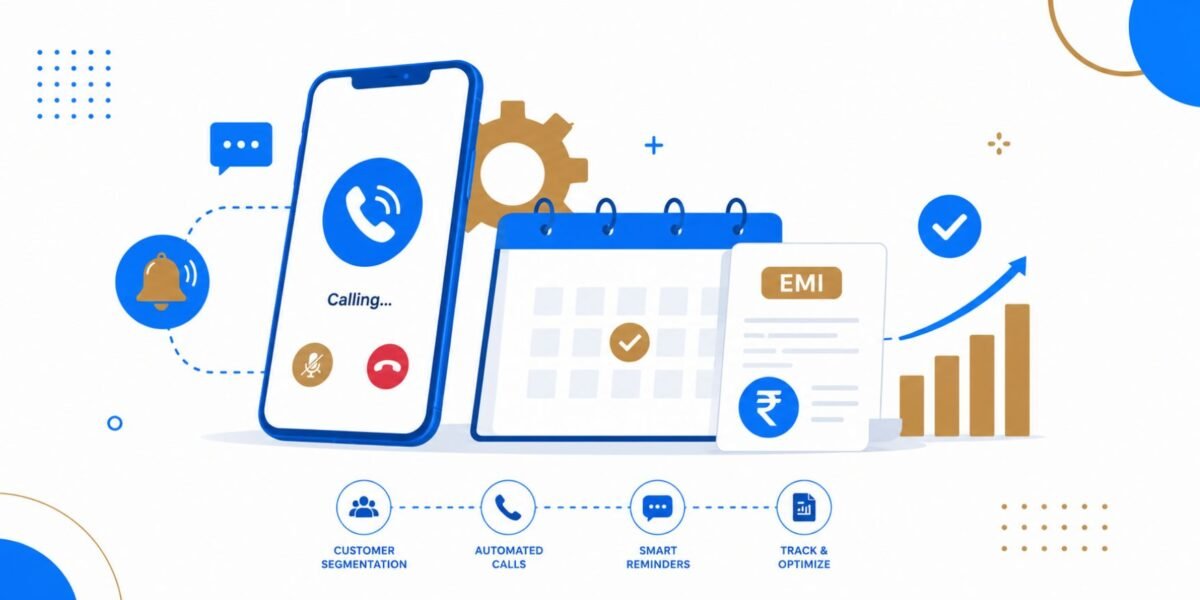
To scale without compromising collection efficiencies, forward-thinking institutions are deploying next-generation technology. By incorporating a robust, enterprise-grade automated debt collection software ecosystem, modern lenders are fundamentally transforming their early-stage Equated Monthly Installment (EMI) collections into a seamless, highly predictable revenue engine.
Why Manual EMI Reminders Drain NBFC Resources?
Relying on manual labor for early-stage accounts receivable is inherently inefficient. Collection agents spend upwards of sixty percent of their daily shifts leaving repetitive voicemails, navigating busy signals, or dealing with completely disconnected phone numbers. This massive operational drag severely inflates the cost-to-collect ratio. When agents finally establish live connections, performance variability and human fatigue can lead to inconsistent customer experiences, risking borrower retention and brand equity.
Furthermore, manual teams operating in the United States face strict regulatory landmines under governing bodies like the Consumer Financial Protection Bureau (CFPB) and the Fair Debt Collection Practices Act (FDCPA) rules. An unscripted comment or a poorly timed call from a fatigued agent can expose an organization to multi-million dollar class-action lawsuits. To eliminate human error, modern financial groups use intelligent payment collection software to standardize day-zero contact paths, ensuring reliable operational guardrails while dramatically optimizing internal human resource allocation.
Why You Need Automated Debt Collection Software?
The primary advantage of modernization is the direct decoupling of loan portfolio growth from operational call center headcount. Instead of employing dozens of additional collectors to manage thousands of new accounts, a centralized platform allows a lean team to manage nationwide operations with absolute precision. Modern cloud platforms enable lenders to deploy algorithmic outreach schedules, reaching past-due borrowers precisely when they are most likely to answer, thereby increasing overall contact rates by orders of magnitude.
True operational efficiency is unlocked when communication expands past standard voice channels. A mature debt collection automation software structure synchronizes live automated calls with instantaneous omnichannel support. If an individual drops off a reminder phone call, the platform instantly triggers contextual follow-ups across SMS, email, and localized digital portals. This creates a multi-layered safety net that safely captures accounts before they ever slip into deeper delinquency tranches.
The Anatomy of an Intelligent EMI Reminder Call Playbook
Phase 1: Pre-Due Date Soft Reminders (Days -5 to -1)
Early intervention focuses strictly on convenience and clear communication rather than urgent collections. During this initial window, natural-sounding automated systems reach out politely to verify that accounts hold sufficient balances for upcoming auto-debits, mitigating accidental defaults and administrative oversights.
Phase 2: Due Date Alerts (Day 0)
When the official settlement date arrives, immediacy is critical. The system deploys proactive notifications paired with instant, actionable solutions. By executing structured automated debt collection sequences, systems can deliver direct, secure transactional links over SMS immediately following a brief voice confirmation, completely removing transaction friction.
Phase 3: Immediate Post-Due Grace Period (Days +1 to +7)
If an initial debit attempt fails, the communication tone shifts from soft reminder to urgent resolution. The system utilizes structured multi-call retry schedules to understand why the payment bounced, offering immediate repayment alternatives before late fees accumulate or credit scores are negatively impacted.
Maximizing Recovery Rates with Automated Debt Collection Software
Not all past-due borrowers share identical habits, and treating them uniformly severely impacts recovery yields. Advanced collection workflows divide past-due accounts into dynamic micro-segments by reviewing credit parameters, historic communication preferences, and past transaction patterns. High-risk borrowers receive customized, immediate attention, while consistently low-risk customers are guided by gentle self-service options.
Modern algorithmic platforms enhance this process by using dynamic script adaptation and automated voice adjustments. As a collection call proceeds, an intelligent system analyzes real-time customer feedback and alters its conversational tone to match the customer’s disposition. Leveraging comprehensive metrics through automated debt collection software engines ensures that financial entities can constantly audit drop-off trends, fine-tune call cadences, and refine overall script messaging for ultimate performance.
When to Transition from Bot to Agent?
While automated voice architectures successfully resolve up to eighty percent of standard early-stage delinquencies, complex cases require human intervention. When a borrower reports severe financial hardships or raises complicated billing disputes, the machine recognizes these emotional and legal triggers immediately. At this point, the automated workflow ceases automated prompts and smoothly passes the conversation to specialized internal mitigation experts.
This dynamic transition is facilitated by modern payment collection software, which passes comprehensive interaction histories, sentiment logs, and account context straight to the live specialist’s dashboard. Because human professionals are completely spared from dialing through repetitive, non-responsive leads, they can focus all their working energy on empathetic negotiation, settlement structuring, and resolving high-value accounts that require personal care.
Compliance and Security in Automated Debt Collection
Operating a financial lending enterprise in the United States requires unwavering commitment to complex consumer compliance laws. Federal agencies strictly enforce specific permissible contact windows, weekly call attempt limitations, and mandatory verbal disclosures. Violating these operational boundaries carries devastating financial penalties. Integrating an advanced debt collection automation software application establishes systemic compliance, as time-zone checks, call caps, and holiday restrictions are hardcoded directly into the system architecture.
Beyond regulatory compliance, securing underlying consumer financial data remains non-negotiable. Modern platforms ensure end-to-end data safety by maintaining strict adherence to SOC 2 Type II certifications, PCI-DSS data standards, and advanced encryption frameworks. Every single automated interaction, consent change, and transactional attempt is instantly indexed inside an unalterable audit trail, providing financial entities with comprehensive compliance documentation during formal internal or regulatory reviews.
Driving ROI with AIVeda’s Automated Debt Collection Software
As financial organizations look to upgrade their outreach frameworks, selecting an enterprise solution that balances cutting-edge tech with deep industry expertise is paramount. This is where AIVeda stands apart. AIVeda provides a pioneering, next-generation platform intentionally engineered to modernize the way financial institutions handle customer engagement, operational overhead, and cash flow security.
AIVeda’s state-of-the-art platform leverages hyper-realistic, emotionally intelligent AI voice agents capable of conducting fluid, human-like conversations that respect borrower dignity while driving results. By embedding seamlessly with your existing payment collection software stacks and core banking databases, AIVeda launches operational campaigns in hours, not months. Transitioning from antiquated workflows to AIVeda’s cohesive automated debt collection suite empowers modern enterprises to slash operational collection expenses by up to 40% while supercharging net recovery returns.
Conclusion
In an environment defined by fluctuating economic shifts and tight margins, managing portfolios through manual labor is no longer a viable operational strategy. To protect cash flows, scale securely, and maintain compliance, consumer finance enterprises must modernize their collection infrastructure. Transitioning to automated tools allows lenders to run efficient, data-driven collection campaigns that benefit both balance sheets and customer relationships.
Implementing an advanced, cloud-native debt collection automation software framework transforms collection operations from an expensive cost center into a lean, highly compliant competitive advantage. Protecting margins while respecting consumer experiences is fully achievable with the right technology partnership. Ready to optimize your recovery workflows? Connect with the enterprise automation experts at AIVeda today to discover how our tailored platforms can modernize your operations.
Frequently Asked Questions
Q1: How does automated debt collection software improve borrower retention?
A: It provides consistent, non-intrusive, and polite reminders, removing the emotional friction and confrontation often associated with manual collection calls, thereby preserving borrower goodwill and trust.
Q2: Can debt collection automation software integrate with our existing CRM?
A: Yes. Modern software features robust APIs that plug directly into your current core banking systems and CRMs, ensuring seamless, real-time data synchronization across all platforms.
Q3: Is automated debt collection compliant with US financial regulations?
A: Absolutely. Built-in compliance features automatically enforce calling time-windows, frequency limits, and state-specific regulations, drastically minimizing human error and legal risks for financial institutions.
Q4: How does payment collection software handle failed payment attempts?
A: The system instantly flags the failure, triggers an immediate fallback communication (like an SMS with an alternative payment link), and schedules an automated follow-up call based on optimized retry logic.