Banks, NBFCs, and fintech lenders across India are automating more of their early-stage collections than ever, with voicebots handling balance reminders. AI dialers running first-notice outreach, automated chat following up on missed EMIs. The motivation is obvious: lower cost, wider language coverage, and outreach that doesn’t depend on shift schedules.
What hasn’t changed is the compliance bar. If anything, it’s gotten stricter. RBI Ombudsman complaints, penalties under the DPDP Act, and TRAI enforcement on unregistered telemarketing calls are all live risks and they apply just as much to an AI system as they do to a human recovery agent. This piece walks through the regulatory landscape behind AI collection calls compliance in India, lays out a practical checklist, and looks at where a compliance-aware AI layer fits into a lender’s stack. A full downloadable version of the checklist is available further down.
Why AI Collection Calls Compliance Is a Growing Priority in India
The Shift From Human Agents to AI-Driven Outreach
Lenders are increasingly automating the repetitive parts of collections first-notice reminders, balance inquiries, and routine follow-ups using voicebots and AI-driven dialers. The appeal goes beyond cost savings: automated systems can run consistently across regional languages and time zones in a way a single calling floor often can’t.
Why Regulators Are Paying Closer Attention
That shift hasn’t gone unnoticed. RBI’s recent directions on recovery conduct have made it explicit that lenders are accountable for all recovery interactions, not just calls placed by a human agent, including automated channels. At the same time, the DPDP Act is being phased into enforcement through 2026 and 2027, raising the compliance bar for any system that processes borrower data, AI or otherwise.
AI collection calls compliance isn’t a separate rulebook lenders need to learn from scratch. It’s the existing RBI, DPDP, and TRAI obligations applied to a newer, faster channel and that’s exactly where lenders tend to get caught off guard, assuming automation sits outside rules written with human agents in mind.
To build a compliant AI calling program, it helps to know exactly which rulebooks apply and where they overlap.
The Regulatory Foundations Behind AI Collection Calls Compliance in India
RBI’s Fair Practices Code & Recovery Agent Norms
Lenders remain responsible for the conduct of their recovery agents, whether the agent is a person or a piece of software. RBI’s Fair Practices Code restricts recovery calls to a defined daytime window commonly cited as 7 AM to 7 PM, with recent regulatory direction tightening enforcement further and prohibits repeated or harassing contact. Every interaction is expected to be recorded and auditable, and borrowers retain the right to escalate unresolved issues to a lender’s grievance redressal officer or, ultimately, the RBI Ombudsman. None of that changes when the voice on the call belongs to an AI system instead of a person.
The DPDP Act, 2023: Consent, Data Handling & Breach Reporting
India’s Digital Personal Data Protection Rules, 2025 are rolling out in phases, with full enforcement expected by mid-2027. But the underlying obligations around consent, data minimization, and breach reporting are already shaping how compliant systems should be built today.
Any AI system pulling a borrower’s account details to place a collection call is acting as a data fiduciary under the Act. That means purpose limitation, only collecting what’s needed for the specific outreach, and the ability to notify the Data Protection Board within 72 hours if something goes wrong.
TRAI’s TCCCPR Rules for Telemarketing & Robocalls
Outbound commercial communication and an automated collection call generally fall into that category. Telemarketing is governed by TRAI’s framework.
That means registered sender IDs and headers, and restrictions on the kind of unsolicited, high-volume calling patterns historically associated with robocall complaints. An AI dialer running outside this registration framework carries the same enforcement risk as an unregistered human-run call center.
Knowing the rules is one thing. Turning them into a working checklist is where most lenders actually need a starting point.
The Core AI Collection Calls Compliance Checklist
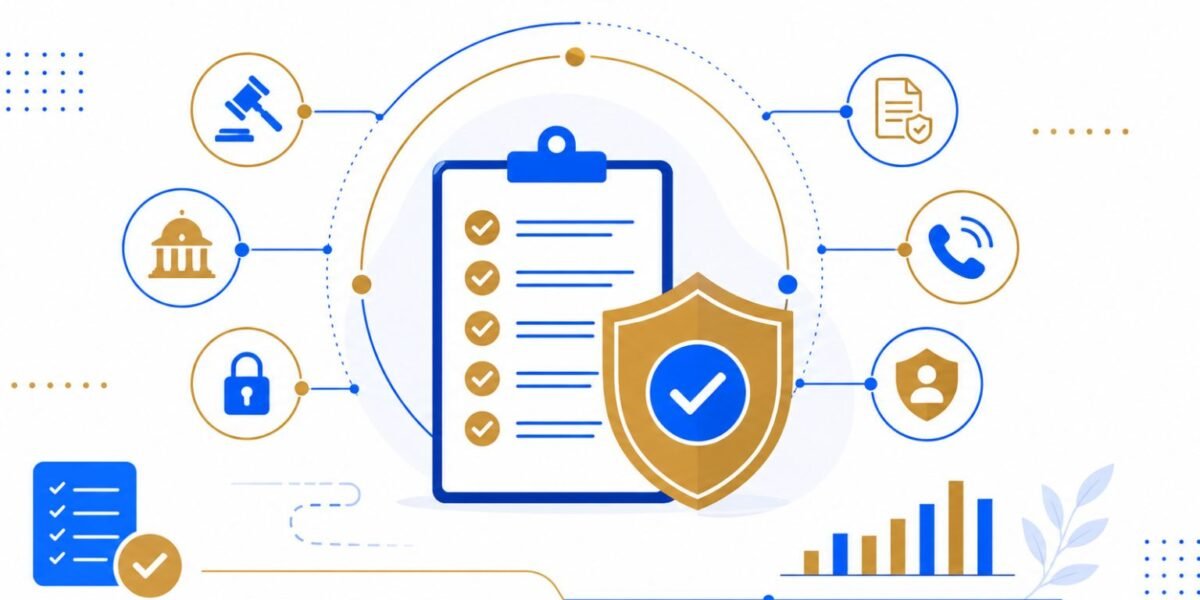
Here’s a partial view of what a compliant setup should cover, broken into four practical categories.
Consent & Disclosure
- Borrower consent is captured and logged before any AI-initiated contact.
- Clear AI/bot disclosure at the start of the call, no impersonating a human agent.
- Lender identity and recovery purpose are stated within the first exchange.
Calling Hours, Frequency & Channel Rules
- Calls restricted to RBI-permitted hours, enforced in the system itself and not left to discretion.
- Programmatic frequency caps, so no borrower receives repeated same-day contact.
- SMS and WhatsApp follow-ups registered in line with TRAI’s telemarketing requirements.
Data Security, Audit Trails & Recordkeeping
- Every AI interaction is logged with a timestamp, content summary, and outcome
- Borrower data access is restricted by role, rather than being open to the entire collections team
- A breach-response workflow that’s mapped to the DPDP Act’s 72-hour notification requirement
Escalation to Human Agents
- Clear triggers for handing off to a live agent disputes, hardship claims, repeated requests to stop.
- Conversation context is preserved during handoff, so the borrower isn’t forced to repeat themselves.
This is a partial view of the full AI collection calls compliance checklist. The complete version is a 30-point downloadable PDF covering RBI, DPDP, and TRAI requirements in detail, along with a self-audit scorecard is available below.
Building AI Collection Calls Compliance Into Your Calling Stack
Why Generic Voicebots Struggle With Indian Compliance Requirements
Most off-the-shelf conversational AI tools weren’t designed around RBI calling-hour logic, DPDP-aligned consent architecture, or regional-language nuance. Compliance tends to get added after deployment, if it’s added at all which means lenders are often the ones discovering the gaps, usually through a complaint or an audit.
What a Compliance-Ready AI Layer Actually Looks Like
A system built for this environment looks different from a generic chatbot:
- Native audit logging and role-based access, not retrofitted reporting.
- Data processing and residency that satisfy DPDP’s data-fiduciary obligations.
- Genuine multilingual handling across Hindi and regional languages, not just translated English scripts.
This is the layer AIVeda’s conversational AI platform, Lira, is built for. Running on AIVeda’s private LLM foundation, Lira keeps borrower data inside the lender’s own environment rather than routing it through a public third-party model.
A meaningful distinction under the DPDP Act’s data-handling requirements. Its adaptive context management and real-time account access also mean a conversation can move from a routine payment reminder to a human-agent handoff without losing the compliance trail in between.
Whether AI is rolled out in-house or through a vendor, the checklist underneath it should look the same either way.
Quick Self-Audit: 5 Questions Before Your Next AI Calling Campaign
- Can you produce a full audit log for any AI-handled call within minutes of being asked?
- Does your AI system enforce India’s permitted calling-hour window without manual oversight?
- Is borrower consent captured and timestamped before first contact?
- Can the system escalate to a human agent without losing conversation context?
- Is borrower data processed and stored in a way that satisfies DPDP Act obligations?
If any answer is not sure, that’s usually the first gap worth closing.
Conclusion
AI collection calls compliance in India isn’t a separate framework that exists alongside RBI, DPDP, and TRAI rules. It’s those same obligations applied to a faster, more scalable channel, and regulators are watching that channel closely. The checklist above is a solid starting point, but it isn’t a substitute for legal review against the current RBI Master Circulars and MeitY notifications, both of which have shifted in the past year.
If you’re evaluating AI vendors for collections outreach, it’s worth asking directly whether compliance was built into the platform from day one or added on afterward. Download the full checklist, and if you’d like to see how a compliance-aware layer like AIVeda’s Lira fits into an existing calling stack. That’s a conversation worth having before your next campaign not after a complaint forces the issue.
Frequently Asked Questions
1. What does AI collection calls compliance actually cover in India?
AI collection calls compliance covers RBI’s recovery-conduct rules, DPDP Act consent and data-handling obligations, and TRAI’s telemarketing regulations. Applied specifically to automated, AI-driven borrower outreach rather than manual calling.
2. Can AI legally make debt collection calls in India?
Yes, provided the system follows the same RBI conduct rules, consent requirements, and calling-hour restrictions that apply to human agents, along with proper disclosure that the borrower is speaking with an AI system.
3. What happens if an AI calling system violates RBI’s calling-hour rules?
The lender, not just the technology vendor, is held accountable. Violations can trigger borrower complaints, RBI Ombudsman escalation, and regulatory penalties tied to the Fair Practices Code.
4. How does the DPDP Act affect AI-driven collection calls?
Any AI system processing borrower data for outreach is acting as a data fiduciary, requiring proper consent, data minimization, and breach-notification readiness under the DPDP Act and its phased rules.
5. Do AI collection calls need to be registered under TRAI rules?
Outbound automated commercial communication generally falls under TRAI’s telemarketing framework, requiring registered sender IDs and headers. The same registration expectations applied to other commercial calling campaigns.
6. How does AIVeda’s Lira support compliant AI collection calls?
Lira combines audit logging, role-based access, and multilingual support on a private LLM foundation, keeping borrower data in-environment while supporting compliant, context-aware collection conversations.