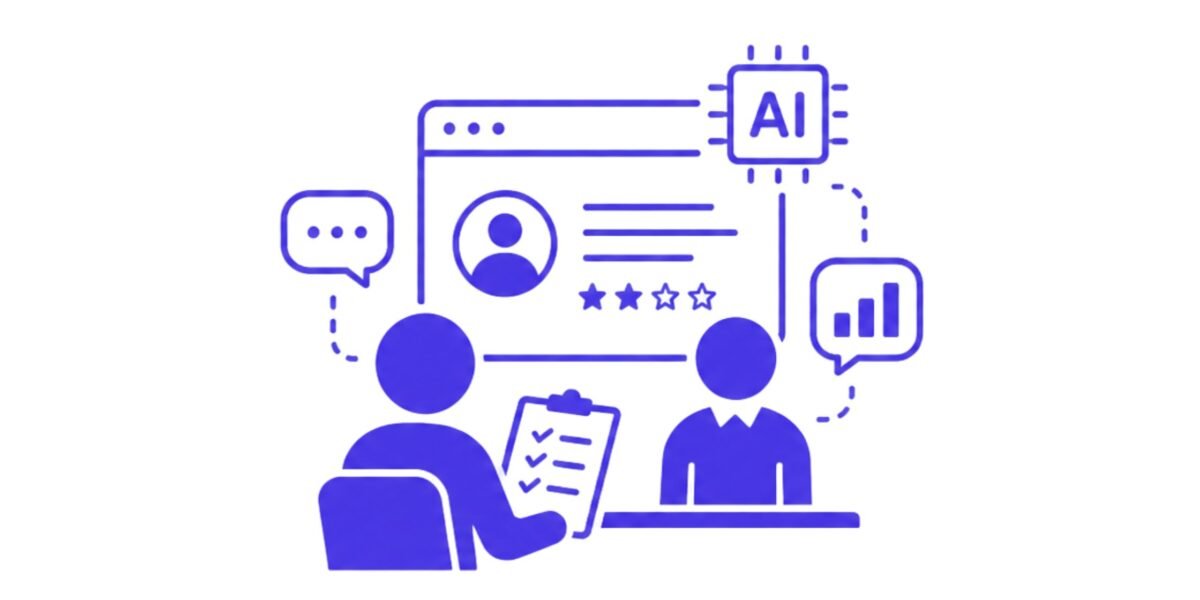
Choosing the right platform in 2026 isn’t as simple as picking whichever tool shows up first in search results. The market has split into two camps: generic tools with AI features bolted on, and platforms purpose-built for structured, high-volume screening. Picking the wrong one means paying for features you don’t need while missing the ones that actually move your hiring metrics.
This guide breaks down what this kind of platform actually does, the features worth paying for, how to evaluate vendors, and where Watson Hive fits if you’re hiring at any meaningful scale.
What Is an AI Interview Platform, and How Does It Work?
An AI interview platform is software that automates candidate screening and interviewing, parsing resumes against job criteria, conducting structured video interviews, and scoring responses objectively, all without a recruiter manually reviewing every application.
Core Capabilities to Expect
Most platforms in this category combine a few core functions: automated resume parsing and ranking, AI-led structured interviews, real-time scoring against defined criteria, and candidate scorecards that summarize fit for hiring managers. Together, these replace hours of manual recruiter work with a process that runs in minutes.
AI Interview Platform vs. Traditional Interview Software
Traditional interview software is largely about logistics like scheduling, video conferencing, and note-taking during live interviews. This kind of platform goes further: it actually conducts and scores the interview itself, removing the recruiter as the sole bottleneck in the process.
Quick Answer
An AI interview platform is software that automates candidate screening and interviews using structured, criteria-based evaluation instead of manual recruiter judgment. The best platforms combine automated resume screening, consistent interview scoring, and native ATS integration. Letting teams hire faster and more fairly at scale.
Why Companies Are Switching to AI-Based Interview Platforms in 2026
The Pressure of Volume Hiring
BPOs, IT staffing firms, and enterprises running bulk hiring campaigns simply can’t scale recruiter headcount fast enough to match candidate volume. An AI-based interview platform lets teams screen and interview hundreds of candidates in parallel, without adding headcount every time a hiring surge hits.
For a deeper look at this specific challenge, see AIveda’s guide on bulk hiring for BPO and IT staffing leaders.
The Demand for Bias-Free, Defensible Hiring
Regulated industries and larger enterprises increasingly need hiring decisions that are consistent and auditable. Standardized scoring across every candidate something manual interviews rarely achieve. This is becoming less of a nice-to-have and more of a compliance expectation.
Distributed and Remote Hiring Needs
With candidates spread across time zones and geographies, an AI-based interview platform lets candidates complete interviews on their own schedule instead of waiting on recruiter availability. A meaningful advantage for distributed hiring teams.
Key Features to Look for in an AI Interview Platform
Not every tool marketed this way delivers the same depth. Here’s what actually matters:
- Automated resume screening: That ranks candidates against defined job criteria, not just keyword matching
- Structured interview scoring: That applies the same rubric to every candidate, removing interviewer-to-interviewer variance
- Native ATS and CRM integration: Results sync automatically instead of requiring manual data entry
- Bias controls and audit trails: Especially important for regulated sectors like BFSI
- Genuine scalability: The platform should handle 50 candidates or 5,000 without a drop in consistency
Feature Checklist for Buyers
| Feature | Why It Matters |
| Automated resume screening | Cuts recruiter hours spent on manual review |
| Structured AI interviews | Standardizes evaluation across every candidate |
| ATS/CRM integration | Keeps data in one place, no duplicate entry |
| Bias controls | Supports fair, defensible hiring decisions |
| Real-time scorecards | Gives hiring managers decision-ready data |
Interview Platform Comparison: What Separates Good from Great
Generic Tools vs Purpose-Built Platforms
Many tools marketed this way are really scheduling and video-conferencing tools with a thin AI layer added on top. They help coordinate interviews but don’t actually screen or score candidates. Purpose-built platforms, by contrast, are designed around the full screening workflow from resume to ranked shortlist.
Evaluation Criteria That Actually Predict Success
When comparing vendors, prioritize evidence of real throughput (how many candidates can be processed in parallel), integration depth, and reporting quality over flashy demos. A platform that looks impressive in a sales call but can’t handle your actual candidate volume isn’t solving your problem.
Generic vs. Purpose-Built: Side-by-Side
| Factor | Generic Tool | Purpose-Built Platform |
| Core Function | Scheduling, video calls | Automated screening + scoring |
| Screening depth | Minimal or none | Full resume-to-shortlist workflow |
| Scoring consistency | Manual, recruiter-dependent | Standardized across all candidates |
| Built for volume | Rarely | Designed for it |
Choosing the Right AI Interview Platform for Your Business
Questions to Ask Before You Buy
Before committing to a vendor, it’s worth asking a few direct questions: Does the platform genuinely process candidates in parallel, or just automate scheduling? How does it integrate with your existing ATS? What does its bias-control and compliance documentation actually look like? Can you see real throughput numbers, not just claimed ones?
Where Watson Hive Fits In
This is exactly the gap Watson Hive was built to close. Built on AIveda’s private, enterprise-grade AI infrastructure, Watson Hive combines automated resume screening, structured AI video interviews, and real-time candidate scorecards purpose-built for BPO, IT staffing, and enterprise teams hiring at volume.
Unlike generic scheduling tools with AI features layered on top, Watson Hive was engineered specifically around high-throughput, bias-free screening. If you want to see how it complements a broader hiring strategy, AIveda’s guide on running round-1 interviews at 10X throughput walks through the mechanics in more detail.
If your team is evaluating platforms for high-volume hiring, Watson Hive is worth including in that shortlist.
AI Interview Platform Buyer’s Checklist (Quick Reference)
Use this as a fast gut-check before signing with any vendor:
- Does it automate resume screening, not just interview scheduling?
- Can it run structured interviews in parallel, at real scale?
- Does it integrate natively with your ATS and CRM?
- Does it provide documented bias controls and audit trails?
- Does it generate decision-ready scorecards for hiring managers?
If a platform can’t check most of these boxes, it’s likely interview software with an AI label, not a true screening solution built for scale.
A quick gut-check worth adding: ask any vendor to show real throughput numbers from an existing client, not a demo environment. Platforms that genuinely handle volume tend to be upfront about this data; those that don’t often redirect the conversation toward features instead.
Key Takeaways
- An AI interview platform automates resume screening and structured candidate interviews, replacing manual, inconsistent screening with standardized, data-driven evaluation.
- The biggest driver of adoption in 2026 is volume: companies hiring at scale can’t staff enough recruiters to keep pace with manual screening.
- Look for native ATS integration, structured scoring, bias controls, and genuine parallel processing not just AI-assisted scheduling.
- Generic interview software often lacks the screening depth and compliance rigor that purpose-built platforms provide.
- Watson Hive, built by AIveda, combines automated resume screening, structured AI interviews, and ranked scorecards in a single platform designed for high-volume hiring.
Conclusion
The right platform should do more than automate scheduling. It should screen, score, and shortlist candidates consistently, at whatever volume your hiring demands. Generic scheduling tools rarely go that deep, which is why purpose-built platforms are increasingly the default choice for BPO, IT staffing, and enterprise hiring teams navigating tighter timelines and larger applicant pools each year.
If you’re ready to evaluate an AI interview platform built specifically for high-volume, bias-free hiring, Watson Hive is a strong place to start.
Book a demo to see how it fits your team’s hiring needs.
Frequently Asked Questions
- What is an AI interview platform?
An AI interview platform is software that automates resume screening and conducts structured candidate interviews, scoring responses against defined criteria instead of relying solely on manual recruiter judgment.
- How is an AI-based interview platform different from interview software?
Interview software typically handles scheduling and video calls, while an AI-based interview platform actually screens resumes, conducts interviews, and scores candidates using standardized, automated criteria.
- Is an AI interview platform only useful for high-volume hiring?
No, though the benefits are largest at scale. Even smaller teams gain from faster screening, consistent evaluation, and reduced recruiter time spent on repetitive interview questions.
- Can an AI interview platform reduce hiring bias?
Yes. Standardized scoring criteria applied consistently to every candidate reduces the variability and unconscious bias that often affects manual, recruiter-led interviews.
- What should I look for when comparing interview platform vendors?
Prioritize real screening depth, genuine parallel processing, ATS integration, and documented bias controls over demo polish. These factors determine whether a platform actually solves your hiring volume problem.