Choosing the right platform in 2026 isn’t as simple as picking whichever tool shows up first in search results. The market has split into two camps: generic tools with AI features bolted on, and platforms purpose-built for structured, high-volume screening. Picking the wrong one means paying for features you don’t need while missing the ones that actually move your hiring metrics.
This guide breaks down what this kind of platform actually does, the features worth paying for, how to evaluate vendors, and where Watson Hive fits if you’re hiring at any meaningful scale.
Quick Answer
An AI interview platform is software that automates candidate screening and interviews using structured, criteria-based evaluation instead of manual recruiter judgment. The category splits into autonomous screening platforms that conduct and score interviews directly, and interview intelligence tools that assist human-led interviews with notes and analytics but don’t run the interview themselves. The right choice depends on how much of the actual screening work you want automated.
What is an AI Interview Platform, and How Does It Work?
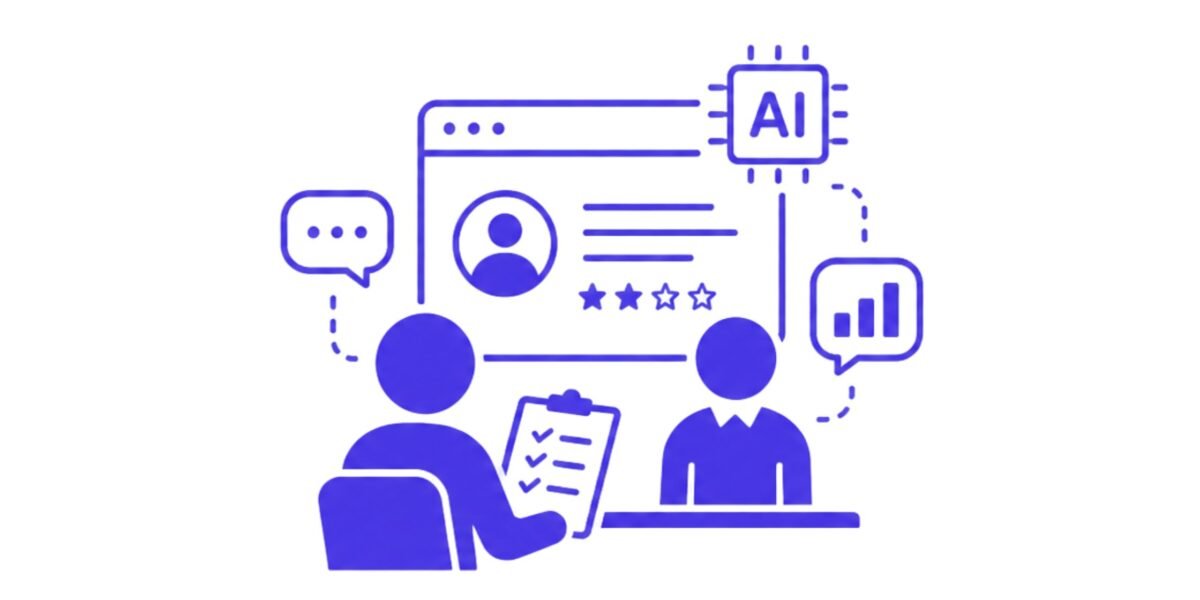
An AI interview platform is software that automates candidate screening and interviewing are parsing resumes against job criteria, conducting structured video or chat-based interviews, and scoring responses objectively, all without a recruiter manually reviewing every application.
Most platforms in this category combine a few core functions: automated resume parsing and ranking, AI-led structured interviews, real-time scoring against defined criteria, and candidate scorecards that summarize fit for hiring managers. Together, these replace hours of manual recruiter work with a process that runs in minutes. For a deeper technical look at how the interview side of this actually works, AIveda’s guide on how to build an AI interview bot is worth reading before evaluating vendors.
AI Interview Platform vs Traditional Interview Software
Traditional interview software is largely about logistics like scheduling, video conferencing, and note-taking during live interviews. This kind of platform goes further: it actually conducts and scores the interview itself, removing the recruiter as the sole bottleneck in the process.
Why Companies Are Switching to AI-Based Interview Platforms in 2026
The Pressure of Volume Hiring
BPOs, IT staffing firms, and enterprises running bulk hiring campaigns simply can’t scale recruiter headcount fast enough to match candidate volume. An AI-based interview platform lets teams screen and interview hundreds of candidates in parallel, without adding headcount every time a hiring surge hits.
For a deeper look at this specific challenge, see AIveda’s guide on bulk hiring for BPO and IT staffing leaders.
The Demand for Bias-Free, Defensible Hiring
Regulated industries and larger enterprises increasingly need hiring decisions that are consistent and auditable. Standardized scoring across every candidate is something manual interviews rarely achieve. This is becoming less of a nice-to-have and more of a compliance expectation.
Distributed and Remote Hiring Needs
With candidates spread across time zones and geographies, an AI-based interview platform lets candidates complete interviews on their own schedule instead of waiting on recruiter availability. A meaningful advantage for distributed hiring teams.
Key Features to Look for in an AI Interview Platform
Not every tool marketed this way delivers the same depth. Here’s what actually matters:
- Automated resume screening: That ranks candidates against defined job criteria, not just keyword matching
- Structured interview scoring: That applies the same rubric to every candidate, removing interviewer-to-interviewer variance
- Native ATS and CRM integration: Results sync automatically instead of requiring manual data entry
- Bias controls and audit trails: Especially important for regulated sectors like BFSI
- Genuine scalability: The platform should handle 50 candidates or 5,000 without a drop in consistency
Feature Checklist for Buyers
| Feature | Why It Matters |
|---|---|
| Automated resume screening | Cuts recruiter hours spent on manual review |
| Structured AI interviews | Standardizes evaluation across every candidate |
| ATS/CRM integration | Keeps data in one place, no duplicate entry |
| Bias controls | Supports fair, defensible hiring decisions |
| Real-time scorecards | Gives hiring managers decision-ready data |
AI Interview Platforms Compared: HireVue, Sapia.ai, Metaview, and Others
A genuinely useful buyer’s guide names names. Here’s how some of the more established platforms in this category actually differ, based on how each is positioned in the market today.
- HireVue is the enterprise pioneer in this space, built around structured video interviews and a deep assessment-science library, with scale few competitors match. Its strength is breadth and maturity; its tradeoff is that video-based tone and expression scoring. A legacy part of its assessment approach now carries the kind of compliance scrutiny described above, something regulated buyers should pressure-test directly with the vendor.
- Sapia.ai takes a different approach entirely: mobile-first, text-based structured interviews rather than video, with explainable scoring aimed specifically at high-volume, frontline hiring. Its fairness positioning is a genuine differentiator, and the chat-based format sidesteps a lot of the video-analysis compliance questions above.
- Metaview is not actually a screening tool, despite frequently appearing in the same comparison lists. It’s an AI notetaker and interview-intelligence platform that joins live, human-led interviews to generate structured notes and cross-interview analysis. It is useful for consistency, but it doesn’t conduct or score interviews autonomously the way Watson Hive or Sapia.ai do.
- BrightHire occupies similar territory to Metaview: strong interview-intelligence and analytics, but humans still run every interview. It’s a good fit for teams that want better documentation, not fewer human interview hours.
- Paradox (Olivia) focuses heavily on conversational scheduling automation for hourly and franchise roles. A strong scheduling layer, though less built around structured, criteria-based candidate scoring than platforms in the autonomous-screening category.
Where Each Platform Actually Fits
| Platform | Category | Best Fit |
|---|---|---|
| HireVue | Autonomous video screening | Enterprise scale, deep assessment library |
| Sapia.ai | Autonomous text/chat screening | High-volume frontline hiring, explainable scoring |
| Metaview | Interview intelligence (assists humans) | Teams keeping human interviews, wanting better notes |
| BrightHire | Interview intelligence (assists humans) | Documentation and consistency across human interviewers |
| Paradox (Olivia) | Conversational scheduling | Hourly/franchise roles, high scheduling volume |
| Watson Hive | Autonomous video/chat screening + interviews | BPO, IT staffing, and enterprise hiring at volume |
The category-level distinction matters more than any single feature comparison: if your goal is reducing the number of human interview hours required per hire, an interview-intelligence tool like Metaview or BrightHire won’t get you there. It makes human interviews better, not fewer. If reducing manual screening and interview load is the actual goal, autonomous platforms like Watson Hive, HireVue, or Sapia.ai are the relevant category to evaluate.
Interview Platform Comparison: What Separates Good from Great
Generic Tools vs Purpose-Built Platforms
Many tools marketed as AI interview software are really scheduling and video-conferencing tools with a thin AI layer added on top. They help coordinate interviews but don’t actually screen or score candidates. Purpose-built platforms, by contrast, are designed around the full screening workflow from resume to ranked shortlist.
Evaluation Criteria That Actually Predict Success
When comparing vendors, prioritize evidence of real throughput (how many candidates can be processed in parallel), integration depth, and reporting quality over flashy demos. A platform that looks impressive in a sales call but can’t handle your actual candidate volume isn’t solving your problem. It’s also worth checking independent review sources like G2’s interview software category alongside vendor claims, since user-submitted ratings tend to surface implementation friction that a demo won’t show.
Choosing the Right AI Interview Platform for Your Business
Questions to Ask Before You Buy
- Before committing to a vendor, it’s worth asking a few direct questions:
- Does the platform genuinely process candidates in parallel, or just automate scheduling?
- How does it integrate with your existing ATS?
- What does its bias-control and compliance documentation actually look like?
- Can you see real throughput numbers, not just claimed ones?
Where Watson Hive Fits In
This is exactly the gap Watson Hive was built to close. Built on AIveda’s private, enterprise-grade AI infrastructure, Watson Hive combines automated resume screening, structured AI video interviews, and real-time candidate scorecards purpose-built for BPO, IT staffing, and enterprise teams hiring at volume.
If you want to see how it complements a broader hiring strategy, AIveda’s guide on running round-1 interviews at 10X throughput walks through the mechanics in more detail.
Unlike generic scheduling tools with AI features layered on top, Watson Hive was engineered specifically around high-throughput, bias-free screening. If you want to see how it complements a broader hiring strategy.
If your team is evaluating platforms for high-volume hiring, Watson Hive is worth including in that shortlist.
AI Interview Platform Buyer’s Checklist (Quick Reference)
Use this as a fast gut-check before signing with any vendor:
- Does it automate resume screening, not just interview scheduling?
- Can it run structured interviews in parallel, at real scale?
- Does it integrate natively with your ATS and CRM?
- Does it provide documented bias controls and audit trails?
- Does it generate decision-ready scorecards for hiring managers?
If a platform can’t check most of these boxes, it’s likely interview software with an AI label, not a true screening solution built for scale.
A quick gut-check worth adding: ask any vendor to show real throughput numbers from an existing client, not a demo environment. Platforms that genuinely handle volume tend to be upfront about this data; those that don’t often redirect the conversation toward features instead.
Conclusion
The right platform should do more than automate scheduling. It should screen, score, and shortlist candidates consistently, at whatever volume your hiring demands, and increasingly, it should be able to explain exactly how it reached that score if a regulator or an internal compliance team ever asks. That last requirement is quietly becoming the real dividing line in this market, more than any single feature on a comparison chart.
Generic scheduling tools rarely go that deep, and even some well-known video-interview platforms are now navigating real compliance exposure around how they score candidates. Watson Hive was built around structured, documented evaluation from the start, which is exactly why it’s a reasonable place to begin evaluating an AI interview platform built for both high-volume, bias-free hiring and the compliance environment this category is heading into.
Frequently Asked Questions
What is the difference between an AI notetaker like Metaview and an autonomous screening platform like Watson Hive?
An AI notetaker assists human-led interviews with transcripts and structured notes but doesn’t conduct or score the interview itself. An autonomous platform runs the interview and produces a scored, ranked shortlist directly.
Can AI interview platforms legally score candidates based on tone or facial expression?
Under the EU AI Act, emotion recognition in workplace contexts has been prohibited since February 2025, making tone- or expression-based scoring a significant compliance risk for platforms still built around that approach.
How does the EU AI Act’s Annex III classification affect vendor selection for enterprise buyers?
It classifies recruitment AI as high-risk, requiring documented bias testing, transparency, and human oversight. Buyers should ask vendors directly for this documentation rather than assuming it exists.
Is a chat-based platform like Sapia.ai less accurate than a video-based one like HireVue?
Not necessarily, chat-based structured interviews can produce equally consistent, explainable scoring while avoiding the compliance complexity that comes with facial or vocal tone analysis in video formats.
What should enterprises ask vendors to validate real throughput claims?
Request specific, verifiable numbers from an existing client deployment, not demo-environment figures, and ask how the platform performs under a genuine volume spike, not steady-state usage.
Does a platform being purpose-built for volume mean it sacrifices interview quality?
No, when scoring is properly structured. Purpose-built platforms like Watson Hive apply the same defined criteria to every candidate, which tends to produce more consistent quality than variable, recruiter-dependent manual interviews.