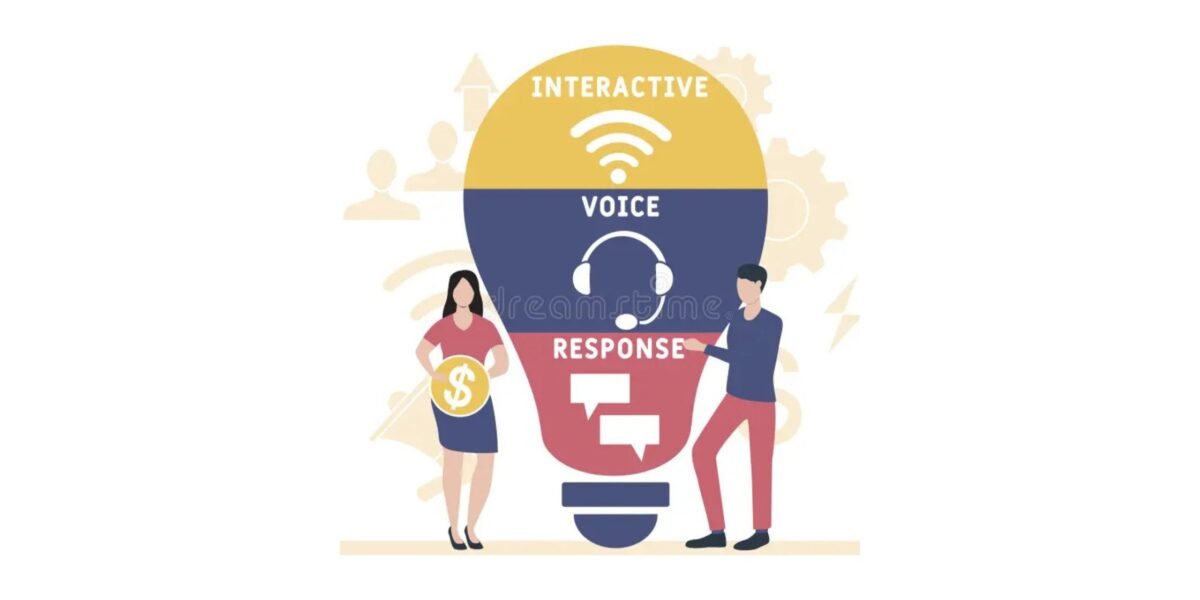
In 2026, Interactive Voice Response (IVR) is no longer just rigid “Press 1” menus. It has evolved into a smart, AI-native conversational gateway that uses Large Language Models (LLMs) to understand caller intent immediately. Businesses are replacing frustrating touch-tone trees with hyper-realistic AI Voice Agents that handle complex tasks, resolve issues, and transfer seamlessly to humans.
The real story in 2026 isn’t “IVR is dead.” It’s that businesses are finally being forced to draw a clear line between what an IVR system should still handle, and what’s outgrown it entirely.
This guide breaks down how interactive voice response actually works, where it still earns its place, what the data says about where it’s failing, and what’s replacing it for the calls a fixed menu was never built to handle.
What is an Interactive Voice Response System?
An interactive voice response system, or IVR is automated telephony technology that interacts with callers through pre-recorded prompts and menu options without requiring a live agent. Callers respond either by pressing keys (DTMF input) or, in more advanced setups, by speaking simple commands.
Picture calling your bank to check a recent transaction: a recorded voice asks for your account number, then offers a menu for balance inquiries: press 1 for recent transactions, press 2 for No human involved, start to finish. That’s a textbook interactive voice response system at work, and for that kind of narrow, predictable task, it still does the job efficiently.
It’s worth distinguishing IVR from two things it’s often confused with: a live receptionist, who handles nuance and unexpected requests, and modern AI voice agents, which understand natural conversation rather than following a fixed menu path.
Learn more about Best IVR services.
The Three Eras of Phone Automation
Most people think of an interactive voice response system as one static technology, but it’s actually evolved through three distinct generations and understanding which era your current system belongs to matters more than any single feature comparison.
| Era | How It Works | Where It Breaks Down |
|---|---|---|
| 1. Menu-based IVR | Fixed keypad menus, DTMF input only | Any request outside the pre-built menu tree |
| 2. Speech-enabled IVR | Limited spoken commands layered onto fixed menus | Still scripted underneath; misunderstands phrasing outside expected patterns |
| 3. Conversational AI voice agents | Natural language understanding, context retention, dynamic routing | Requires more sophisticated infrastructure and integration than legacy IVR |
Both of the first two generations, however advanced the input method, still follow a fixed script underneath. That’s the ceiling every traditional interactive voice response system eventually hits, no matter how many menu layers get added on top.
Where Interactive Voice Response Still Delivers Value in 2026
Despite the frustration data, a well-configured interactive voice response system remains genuinely cost-effective for scenarios where the interaction is short, predictable, and doesn’t require nuanced understanding:
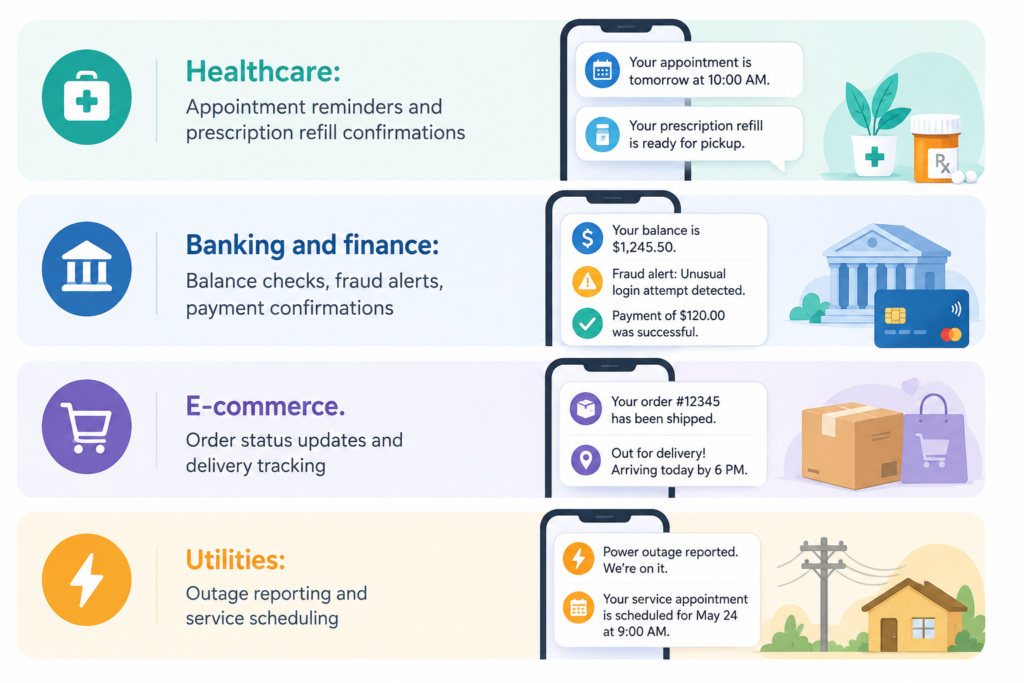
The pattern across all four: narrow, high-volume, low-ambiguity tasks. The moment a caller’s request falls outside that narrow lane. The same system that worked well a moment ago starts working against the business instead.
The Real Cost of a Frustrating IVR Experience
This is where the data gets uncomfortable for anyone still treating IVR as a “set it and forget it” system. Beyond the general frustration numbers cited earlier, Gartner reports that 91% of customer service leaders are under active pressure to implement AI in 2026, a sharp acceleration in how urgently this problem is being treated at the leadership level not a slow-burn modernization project anymore.
The financial damage concentrates in ways standard satisfaction scores tend to miss entirely:
- Abandoned calls that never get logged as lost revenue, just silence
- Repeat calls from customers who couldn’t resolve their issue the first time
- Unnecessary live-agent transfers for requests a smarter system could have resolved directly
- Brand damage that shows up in churn months later, disconnected from the original phone call
None of this means ripping out every interactive voice response system overnight. It means being honest about which calls it’s actually still serving well, and which ones it’s quietly costing you.
Signs You’ve Outgrown Traditional IVR
A quick, honest checklist, if more than one or two of these sound familiar, it’s worth evaluating an upgrade path:
- Callers frequently press “0” repeatedly trying to reach a human
- Menu trees have grown past five or six options because new use cases keep getting bolted on
- The same caller has to repeat account details every time they’re transferred
- Agent teams are fielding calls that should have been resolved by self-service
- Complaints about “the phone menu” show up consistently in customer feedback
What’s Replacing Traditional IVR: Conversational AI Voice Agents
Unlike a traditional IVR system, conversational AI voice agents use natural language understanding to interpret a caller’s intent regardless of exact phrasing. Instead of forcing callers through a decision tree, these systems hold context across a conversation, ask clarifying questions, and resolve requests that would previously have required a menu option that simply didn’t exist.
The appeal isn’t just about sounding modern, it comes down to measurable outcomes: faster resolution with fewer menu steps, natural language understanding instead of rigid keyword matching, fewer repeat transfers, and better data capture for analytics and personalization.
AIveda builds in exactly this space. Its Conversational Agent Platform, built on AIveda’s private Lira LLM, replaces fixed-menu call flows with natural conversation handling. Call data stays inside the enterprise’s own environment rather than routing through a shared public model, which matters for regulated industries like healthcare and financial services specifically. For a broader look at how these systems get designed across different use cases.
Our guide on voice bots for call centers walks through eight real call-flow examples.
Choosing Between IVR, Hybrid, and Full Conversational AI
| Approach | Best Fit | Watch Out For |
|---|---|---|
| Keep traditional IVR | Simple, narrow, high-volume tasks (balance checks, order status) | Menu creep as new use cases get bolted on over time |
| Hybrid (IVR + AI layer) | Businesses easing into AI without a full rebuild | Integration complexity between old and new systems |
| Full conversational AI | Complex, varied, or high-stakes calls (collections, healthcare, sales) | Requires proper CRM integration and compliance setup upfront |
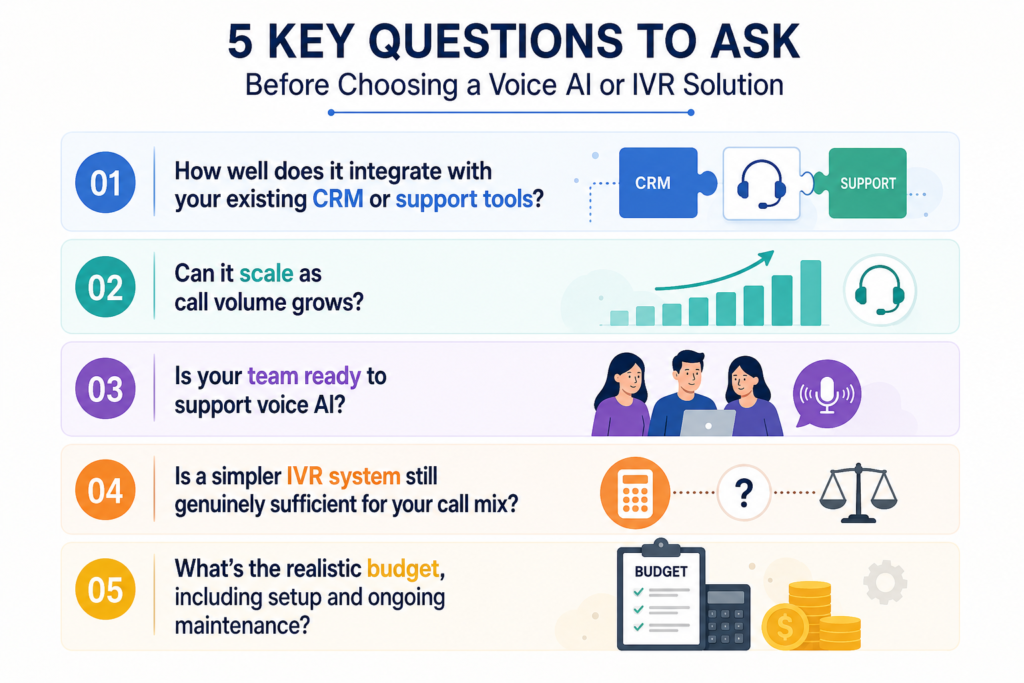
Questions Worth Asking Before Committing To Any Path:
Conclusion
The interactive voice response system isn’t obsolete in 2026. It’s just being asked to do less than it used to and that’s a good thing. It still earns its place on short, predictable, high-volume calls: balance checks, order status, appointment confirmations.
But the data is hard to argue with: a large majority of customers actively dislike navigating rigid phone menus, and a meaningful share will avoid a company entirely after a bad experience with one.
The businesses getting this right in 2026 aren’t ripping out IVR wholesale they’re drawing an honest line between what a menu can still handle and what needs a conversational AI layer instead, then building toward that line deliberately rather than letting frustrated callers make the decision for them.
Frequently Asked Questions
Why do so many companies keep an outdated IVR system even after customers complain about it?
Because it’s cheap, familiar, and still technically works, switching costs feel higher than the hidden cost of frustrated callers until abandonment and churn data make that tradeoff impossible to ignore.
Can a business run IVR and conversational AI at the same time, or does it have to be one or the other?
Most businesses run a hybrid model during transition like simple, narrow tasks stay on traditional IVR while more complex or high-value calls route to a conversational AI layer.
What’s the fastest way to tell if a caller’s frustration is an IVR design problem versus a genuine self-service limitation?
If callers repeatedly press “0” or hang up mid-menu on the same types of requests, that’s a design and scope problem, not a fundamental limitation of automated phone support.
Does upgrading to conversational AI voice automation require replacing existing telephony infrastructure?
Not usually. Most modern conversational AI platforms integrate with existing telephony and CRM systems rather than requiring a full infrastructure rebuild.
How does a conversational AI voice agent handle a caller who switches topics mid-call?
It retains context across the conversation and can address a new topic without restarting the interaction, unlike a fixed IVR menu. This typically has to route the caller back to a menu root.
Is speech-enabled IVR basically the same thing as an AI voice agent?
No. Speech-enabled IVR still follows a fixed script underneath spoken input. A true AI voice agent understands varied phrasing and intent rather than matching against a limited set of expected commands.