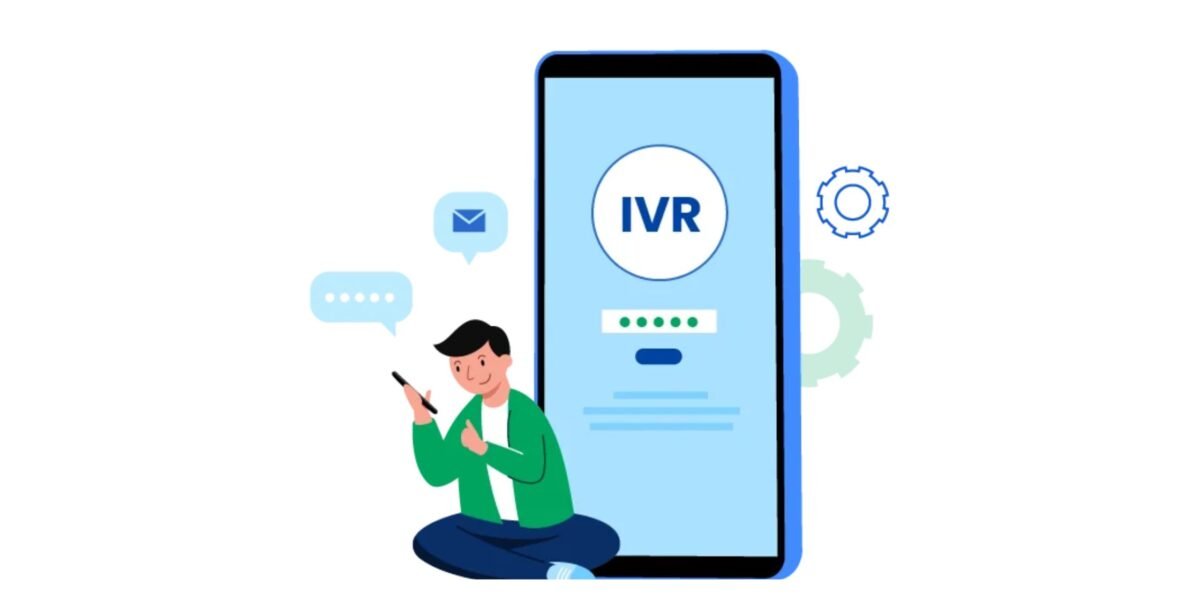
Interactive voice response has been the backbone of inbound call handling for Indian enterprises for well over a decade. Banks, NBFCs, telecom providers, hospitals, and logistics companies all run one. For many, it’s doing exactly what it’s supposed to do. Routing call volume, deflecting simple queries, and keeping agents free for the conversations that actually need them. For others, the same system that solved a problem five years ago is now quietly creating new ones.
This piece serves two purposes. If you’re evaluating IVR service for the first time, it gives you a clear framework for what to look for and which providers are worth shortlisting in India. If you’re already running one, it gives you a diagnostic. Five specific signs that your business has outgrown what traditional IVR solutions can deliver, and what the logical next step looks like when it has. For a broader context on where IVR stands today, AIVeda’s IVR in 2026 Complete Guide covers the full technology landscape in detail.
What a Good IVR Service Actually Delivers
Before comparing providers, IVR service helps to establish what a capable system should actually do in 2026 because the baseline has moved well.
Core Capabilities Worth Expecting
The minimum bar for any credible provider today goes beyond call routing. A system worth deploying should deliver:
- Multi-level routing based on both caller input and live account data. So the system knows the caller’s name, account status, and outstanding balance before a menu option is pressed
- Regional language support covering the languages your customer base actually uses, such as Hindi and English, is the floor, not the ceiling, for any business operating across India
- CRM and core-system integration, so responses are personalized rather than generic
- Self-service transactions balance checks, EMI status, appointment confirmation, and payment reminders that resolve without an agent involved
- Call recording and structured logging for compliance review
- Real-time analytics on call volumes, drop-off rates, and self-service completion
How to Evaluate an IVR Service Provider Before You Commit
The difference between a capable and a frustrating IVR service provider rarely comes down to price. It comes down to three things: how deep the CRM integration actually goes (API-level vs pre-built connector vs manual export), how good the regional language quality is in practice rather than on a spec sheet, and what the SLA looks like when something breaks during a peak call window. Those three questions filter out most of the noise before you sit through a single demo.
With those criteria in hand, here’s how the leading IVR companies operating in India hold up against them.
Top IVR Providers in India Worth Knowing
India has a mature market of IVR providers across price points and verticals. The table below covers the vendors most commonly shortlisted by enterprise buyers, along with their strongest use case fit.
Side-by-Side Comparison
| Provider | Best For | Regional Languages | CRM Integration | Deployment | Pricing Model |
|---|---|---|---|---|---|
| Exotel | SMEs, startups, sales teams | 10+ | Salesforce, Zoho, custom API | Cloud | Pay-per-use |
| Knowlarity | BFSI, enterprise inbound | 12+ | Custom API, major CRMs | Cloud + hybrid | Monthly plans |
| Servetel | Mid-market, collections, logistics | 8+ | Major CRMs | Cloud | SME-friendly tiers |
| MCUBE | Telecom, large contact centers | 10+ | Custom API | Cloud | Volume-based |
| Tata Tele Business Services | Enterprise, regulated sectors | 14+ | Enterprise-grade | Cloud + on-prem | Enterprise plans |
| MyOperator | SMEs, retail, e-commerce | 8+ | Major CRMs | Cloud | Tiered monthly |
Verify current pricing tiers, language counts, and integration specifics directly with each provider before making a purchasing decision. The above reflects general market positioning as of 2026.
Industry-Specific Fit Among IVR Companies
Provider choice often depends more on vertical than on company size.
- For Banking and BFSI: The priority is TRAI and RBI compliance posture, audit-ready call logging, and integration with core banking systems. Knowlarity and Tata Tele Business Services tend to be the most commonly shortlisted among larger BFSI enterprises.
- For Telecom: High-volume capacity, network-level integration, and queue management during traffic spikes take priority over language breadth. MCUBE’s infrastructure depth makes it a frequent choice here.
- For Healthcare: Patient data handling, appointment self-service, and Hindi/regional language quality are the key differentiators. MyOperator and Servetel are common starting points for mid-size hospital and clinic networks.
Most IVR companies in this list serve all three verticals, but the depth of compliance architecture and integration quality varies significantly. This is exactly what the three evaluation questions from the previous section are designed to surface.
The table above answers the which provider question. But for a growing number of Indian enterprises, the more important question is whether IVR itself has become the bottleneck.
Signs You’ve Outgrown Your IVR Service
There’s rarely a single moment when the system stops working. It’s usually a slow accumulation of friction complaints that get attributed to individual incidents, workarounds that become standard operating procedure, and metrics that quietly plateau. These five signs are worth checking against your current setup.
Sign 1: Your Callers Are Escaping to “0” Constantly
If the majority of callers skip the menu and press zero for a live agent within the first few seconds, the system isn’t deflecting volume. It’s adding a step before the caller reaches the person they were always going to ask for. High escape rates are the clearest signal that the system isn’t serving the caller’s actual intent, whether because of poor menu design, language mismatch, or a self-service flow that doesn’t resolve real queries.
Sign 2: Language and Dialect Coverage Has Created Gaps
India’s linguistic diversity means a system that handles Hindi and English but stumbles on Tamil, Marathi, or Kannada is effectively excluding a portion of the customer base. IVR solutions that rely on pre-recorded audio for language support can’t adapt. They play a recording regardless of what the caller says or how they say it. That limitation shows up as misrouted calls, repeated transfers, and callers simply hanging up.
Sign 3: Compliance Reporting Is Manual and Incomplete
TRAI, RBI, and SEBI each have requirements for how specific call types must be handled, logged, and archived. If producing a compliance report from the current setup requires someone to manually pull call logs, cross-reference recordings, and assemble a spreadsheet, the platform isn’t keeping pace with what regulators are starting to expect. For BFSI enterprises specifically, see AI Governance & Compliance and AIVeda’s AI-Powered Debt Collections guide for what compliant call infrastructure looks like in practice.
Sign 4: High-Value Outbound Use Cases Are Out of Reach
Traditional IVR companies build their products around inbound routing. Outbound capability exists for broadcast reminders and OTP delivery but the moment an outbound call requires any back-and-forth, IVR hits its ceiling.
Payment negotiations, EMI follow-ups, appointment rescheduling requests, and collections conversations all require the caller to respond meaningfully and have that response handled intelligently. That’s not something a menu-based system was designed to do. AIVeda’s Automating EMI Reminder Calls: The NBFC Playbook covers exactly where this gap shows up in practice for fintech and NBFC operations.
Sign 5: Peak-Period Performance Is Degrading
Dropped calls, extended queue times, and degraded audio quality during billing cycles or product launch windows are signs that the current infrastructure has reached its practical capacity ceiling. Scaling IVR traditionally means provisioning more channels. A cost and lead-time commitment that makes reactive scaling difficult.
Recognizing these signs is the first step. The second is understanding that the right next move isn’t always upgrade the IVR.
When It’s Time to Move Beyond IVR: What the Next Layer Looks Like
The Gap Between IVR and Full Human Staffing
Most Indian enterprises don’t need to eliminate IVR, they need to extend it. Between pressing 1 for billing and hiring fifty more agents sits a layer that IVR can’t reach and full human staffing is too costly to cover: intelligent, conversational, outbound-capable AI voice interactions.
A modern AI voice layer handles open-ended natural language, retains context across a multi-turn exchange, and covers the outbound scenarios that traditional IVR solutions leave unaddressed. AIVeda’s breakdown of Voice Bots for Call Centers: 8 Use Cases with Real Call Flows maps out exactly where this layer earns its place across different enterprise environments.
What to Look for When Evaluating the Next Step
Whether through an IVR service provider that offers an AI upgrade tier or a dedicated conversational AI platform, the evaluation criteria should include:
- Natural language understanding that handles regional Indian languages through trained multilingual models, not pre-recorded script playback
- Context retention across a full multi-turn conversation, the system shouldn’t forget what the caller said two exchanges ago
- Clean integration with existing CRM, telephony, and workflow systems without a full infrastructure rebuild
- Compliance architecture audit logging, role-based access control, data residency designed in from the start, not retrofitted
- Post-deployment monitoring and drift detection as call volumes, language patterns, and business workflows evolve
Where AIVeda’s Lira Fits In
For enterprises evaluating what sits above their current IVR service provider, AIVeda’s conversational AI platform, Lira, is built to operate exactly in this gap. As part of AIVeda’s Conversational Agent Platform, Lira handles natural, multi-turn voice conversations inbound and outbound.
With adaptive context management and real-time account data access. Critically for Indian BFSI and regulated enterprises, Lira runs on AIVeda’s private LLM foundation, meaning borrower data, account details, and conversation records stay inside the enterprise’s own environment rather than passing through a shared public model.
That private deployment model isn’t an optional feature. It’s the architecture that makes the compliance conversation straightforward for businesses operating under RBI or SEBI oversight. The right time to evaluate this layer isn’t after the next IVR contract renewal. It’s before it.
Conclusion
Finding a strong IVR service in India is a solved problem. The providers in the comparison table above cover the market well across verticals and price points. The harder question is what comes next when the limitations of IVR start showing up in your metrics, your compliance posture, and your callers behavior.
If three or more of the five signs in this piece apply to your current setup, the next conversation probably shouldn’t be about switching IVR providers. It should be about what layer sits above the IVR entirely.
Frequently Asked Questions
1. What is an IVR service?
It’s a phone-based automation system that routes callers through menu options or voice commands, handling routine inquiries without requiring a live agent on every call.
2. Which IVR provider is best for Indian enterprises?
The best choice depends on industry and scale. BFSI and regulated enterprises typically need deeper compliance architecture and CRM integration than what SME-focused vendors offer by default.
3. How do IVR solutions handle multiple Indian languages?
Most IVR solutions use pre-recorded audio for language support, which covers major languages but struggles with dialect variation. AI-powered systems handle regional nuance through trained multilingual models rather than static recordings.
4. What are the signs that IVR companies products are no longer enough?
High caller escape rates, incomplete compliance reporting, inability to handle outbound conversations, regional language gaps, and infrastructure bottlenecks during peak periods are the clearest signs of IVR outgrowth.
5. Is conversational AI a replacement for traditional IVR?
Not necessarily, it’s an extension for most enterprises. Conversational AI handles complex, multi-turn interactions that IVR can’t, while traditional systems continue to manage simple, predictable call routing at volume.
6. How does AIVeda’s Lira differ from a traditional IVR service?
Lira understands natural spoken language, retains context across a full conversation, and handles outbound interactions. Capabilities that go well beyond what a menu-based IVR can deliver.