A thousand resumes land for a single job posting more often than most hiring teams expect, especially during a hiring surge or a new client ramp-up. Read each one properly, even briefly, and that’s easily 300+ hours of recruiter time before a single interview gets scheduled. This category of software exists to close that exact gap and the difference between doing it manually and doing it with the right tool isn’t incremental. It’s the difference between a week and an afternoon.
This piece breaks down how automated resume screening software actually works, what separates strong CV screening software from tools that only do surface-level keyword matching, and how AIveda’s Watson Hive screens and scores resumes at scale turning a thousand-CV pile into a ranked shortlist in minutes.
Quick Answer
Automated resume screening software uses AI to parse resumes, match candidates against defined job criteria, and produce a ranked shortlist. A process that can score 1,000 CVs in minutes instead of the days it would take a recruiter to review them manually. The best tools go beyond keyword matching to score relevant experience, skills, and role fit consistently across every applicant.
What Is Automated Resume Screening Software, and How Does It Score 1,000 CVs in Minutes?
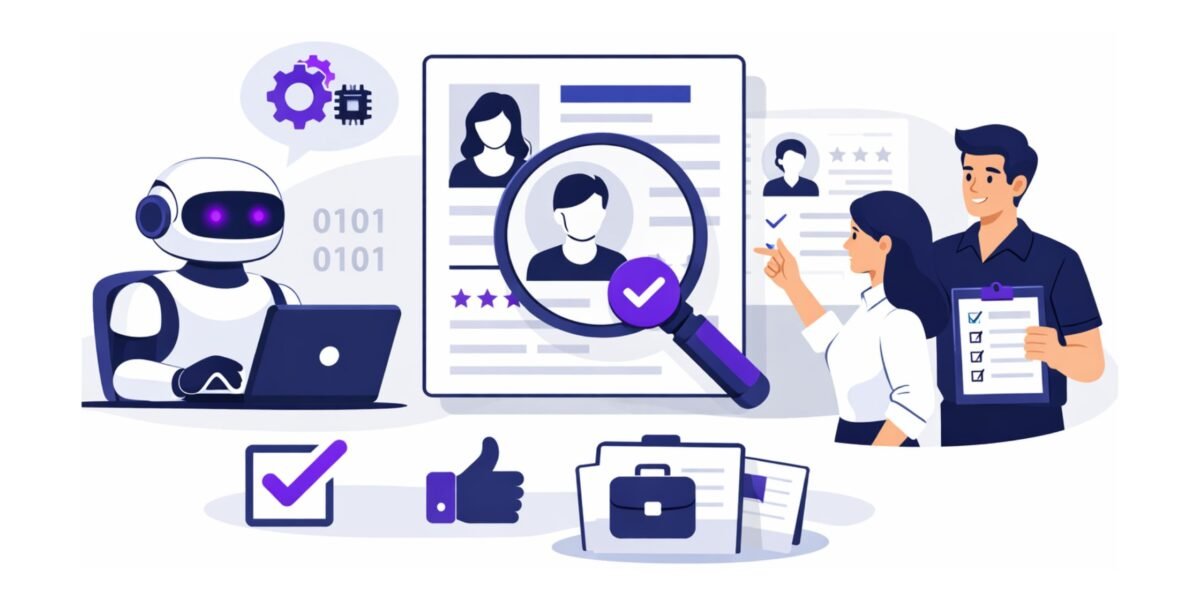
Automated resume screening software uses AI typically natural language processing. To read resumes the way a recruiter would, but at a speed no human can match. It parses each document, extracts relevant details like experience, skills, and qualifications, and scores them against the specific criteria defined for a role.
The speed comes from parallel processing. Where a recruiter reviews resumes one at a time, this kind of software evaluates hundreds or thousands simultaneously, applying the exact same scoring logic to every single one. A thousand CVs don’t take a thousand times longer than one. They’re processed together, which is how the minutes, not days claim actually holds up in practice. Platforms like Watson Hive build on this same principle, layering structured scoring on top of parsing so recruiters get a ranked list, not just a filtered pile. For teams curious about the broader automation logic behind tools like this, AIveda’s AI agent development services page covers how autonomous workflows like this get built.
The Business Case for Automated Resume Screening Software
The value here isn’t abstract, it shows up directly in three places:
- Recruiter hours reclaimed. Every hour not spent manually reading resumes is an hour available for interviewing, closing offers, or managing client relationships instead.
- Faster time-to-shortlist. A process that used to take days can be compressed into minutes, which matters enormously when a role needs to be filled under a tight deadline.
- Better candidate experience. Faster turnaround means candidates hear back sooner, reducing the drop-off that happens when strong applicants get tired of waiting and accept another offer.
What Changes With Automation
| Metric | Manual Screening | Automated Resume Screening Software |
|---|---|---|
| Time to screen 1,000 resumes | Days | Minutes |
| Consistency across candidates | Varies by recruiter | Standardized every time |
| Recruiter hours required | High | Minimal |
| Scalability during hiring surges | Limited by headcount | Scales independently |
Resume Screening Software vs. CV Screening Software vs. Resume Shortlisting Software: Are They the Same Thing?
Largely, yes. These terms describe the same category of tool, though the language shifts depending on who’s searching. Resume screening software and CV screening software are essentially regional variants of the same phrase, with CV more common outside the US. Resume shortlisting software leans slightly more toward the output. The ranked list a recruiter actually acts on rather than the screening process itself.
What actually matters isn’t which term a vendor uses, but what the tool does underneath it. Some resume screening software stops at keyword matching: does this CV contain the word Python, yes or no. That’s a low bar, and it misses candidates who describe the same skill differently, while letting through candidates who simply stuffed the right keywords into their resume. Genuine CV screening software goes further, scoring relevant experience and context, not just matching words on a page.
How Watson Hive Screens 1,000 Resumes in Minutes
Here’s what that process actually looks like inside a platform built specifically for this problem:
- Resumes flow in automatically from your ATS or job board, with no manual upload required.
- Watson Hive parses every resume, extracting experience, skills, and qualifications relevant to the specific role.
- Each candidate is scored against defined job criteria not just keyword presence, but relevance and depth of experience.
- A ranked shortlist is generated in minutes, giving recruiters a prioritized list instead of an unsorted pile.
- Top candidates flow directly into structured AI interviews, so the screening output isn’t a dead end, it’s the start of the next step.
That last point is what separates Watson Hive from a standalone screening tool: it’s not just a resume screener sitting in isolation. It connects screening directly to interviewing, so a recruiter goes from “1,000 resumes just arrived” to “here’s your ranked shortlist, already moving through interviews” without manually handing candidates off between disconnected systems. If you want to see the mechanics behind the interview side of this process, AIveda’s guide on how to build an AI interview bot covers it in detail.
What to Look for in Resume Shortlisting Software Before You Buy
A few questions separate genuinely useful tools from ones that look impressive in a demo but fall short in practice:
- Does it score candidates on relevant criteria, or just match keywords?
- Can it handle 1,000+ resumes without slowing down or losing accuracy?
- Does it integrate natively with your existing ATS?
- Does the shortlist connect directly into interviews, or does it end at a static list?
- Is scoring consistent and explainable across every candidate?
It’s worth actually testing these questions rather than taking a sales pitch at face value. Upload a batch of real resumes, including a few borderline candidates, and see whether the tool’s ranking matches what an experienced recruiter would conclude on their own. That gap between a tool that looks fast in a demo and one that’s actually accurate on messy, real-world resumes. It is where most disappointing purchases happen.
Watson Hive checks each of these boxes directly, which is exactly why it’s built the way it is: automated screening that flows into structured interviews, not a screening tool that stops halfway through the hiring process. For teams evaluating where AI fits across their broader hiring and HR stack, not just resume screening, AIveda’s AI consulting services can help map out the bigger picture.
Key Takeaways
- Automated resume screening software parses and ranks candidates against job criteria in minutes, replacing the hours a recruiter would spend manually reading through a stack of CVs.
- The gap between resume screening software and true automated screening comes down to depth some tools just keyword-match, others genuinely score candidates against structured criteria.
- CV screening software becomes essential once applicant volume crosses a few hundred resumes per role, which happens fast during hiring surges.
- Resume shortlisting software should do more than filter out weak candidates. It should rank strong ones so recruiters know exactly who to prioritize first.
Conclusion
A thousand resumes shouldn’t mean a thousand hours of recruiter time, and with the right automated resume screening software, they don’t have to. The gap between a tool that just filters keywords and one that genuinely scores candidates, then connects that score directly to the next hiring step is where the real time savings show up.
Watson Hive was built around exactly that gap: automated resume screening that scores 1,000 CVs in minutes and flows straight into structured interviews, so your shortlist is ready to act on the moment it’s generated. If resume volume is the bottleneck slowing your hiring down, it’s worth taking a closer look at Watson Hive.
Frequently Asked Questions
What is automated resume screening software?
Automated resume screening software uses AI to parse resumes and score candidates against defined job criteria, producing a ranked shortlist in minutes instead of requiring manual review of each application.
How does automated resume screening software score 1,000 CVs so quickly?
It processes resumes in parallel rather than one at a time, applying the same scoring criteria to every candidate simultaneously, which is what makes minutes-not-days screening possible at scale.
Is CV screening software different from resume screening software?
Not meaningfully. Both terms describe the same category of tool; CV is simply the more common term outside the US, while the underlying screening technology works the same way.
What separates good resume shortlisting software from basic keyword matching?
Strong resume shortlisting software scores relevant experience and context, not just keyword presence, so candidates who phrase skills differently aren’t unfairly filtered out of consideration.
Does Watson Hive integrate resume screening with interviews?
Yes. Watson Hive automates resume screening and connects the ranked shortlist directly into structured AI interviews, so candidates move through the pipeline without manual handoffs.
Can automated resume screening software handle sudden hiring surges?
Yes, that’s one of its core advantages. It scales to thousands of resumes without added recruiter headcount, making it well suited to sudden volume spikes during hiring surges.