
Artificial intelligence is quickly becoming a key component of business operations. Businesses are using AI to automate processes, evaluate sensitive data, and enhance decision-making in a variety of industries, including financial services, healthcare, retail, and logistics. However, private AI compliance is becoming increasingly important as AI systems are integrated into vital company infrastructure. Sensitive data, …
Marketing Head at AIVeda, a master of impactful marketing strategies. Avinash's expertise in digital marketing and brand positioning ensures AIVeda's innovative AI solutions reach the right audience, driving engagement and business growth.

Artificial intelligence is quickly becoming a key component of business operations. Businesses are using AI to automate processes, evaluate sensitive data, and enhance decision-making in a variety of industries, including financial services, healthcare, retail, and logistics. However, private AI compliance is becoming increasingly important as AI systems are integrated into vital company infrastructure. Sensitive data, …
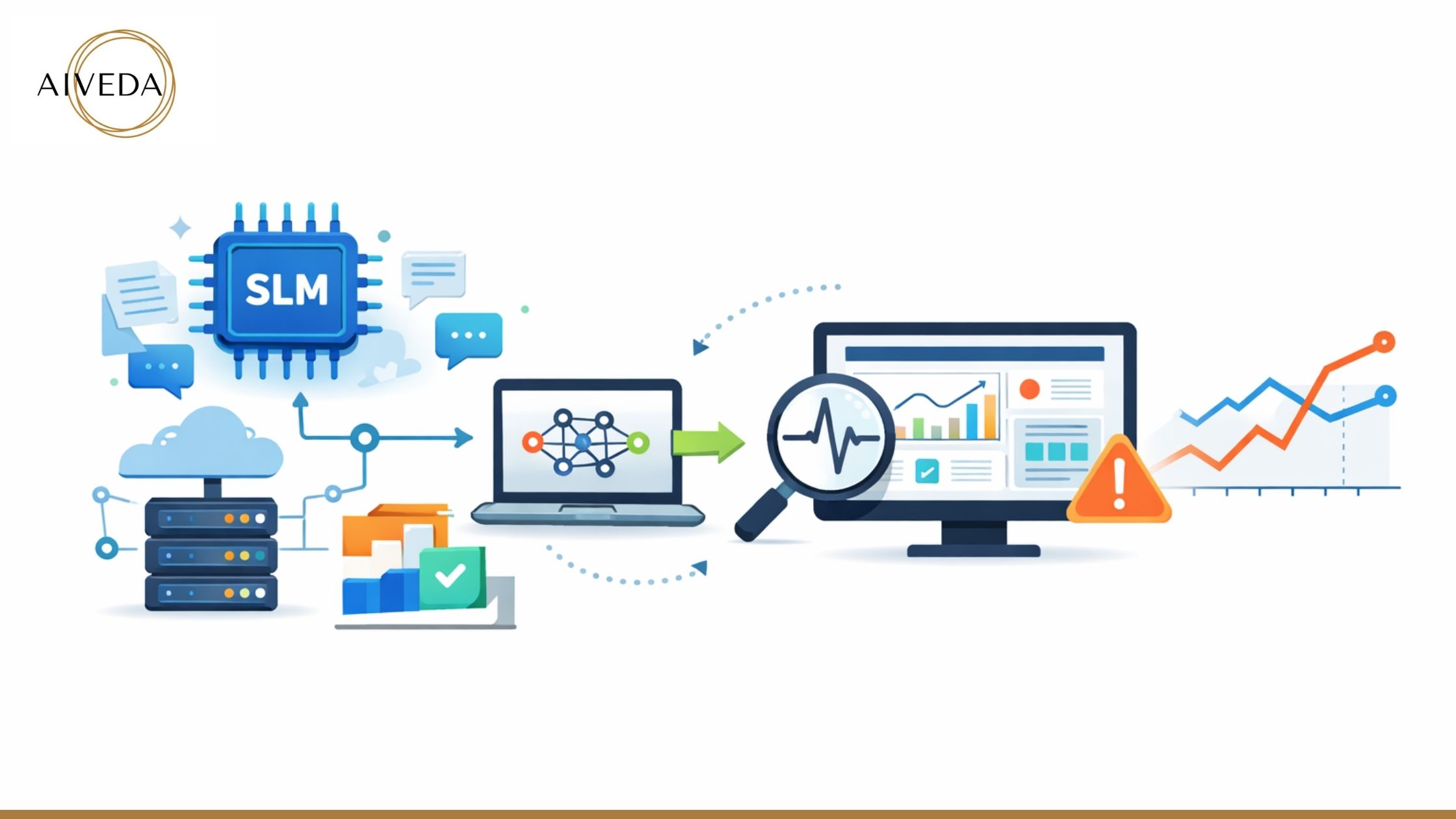
Businesses are using smaller, more specialised models that are tailored to certain workflows rather than depending just on large general-purpose models. These models provide stricter governance controls, predictable infrastructure costs, and quicker responses. Consequently, the deployment of small language models is becoming a fundamental element of contemporary industrial AI architecture. Enterprise SLM deployment methods that …
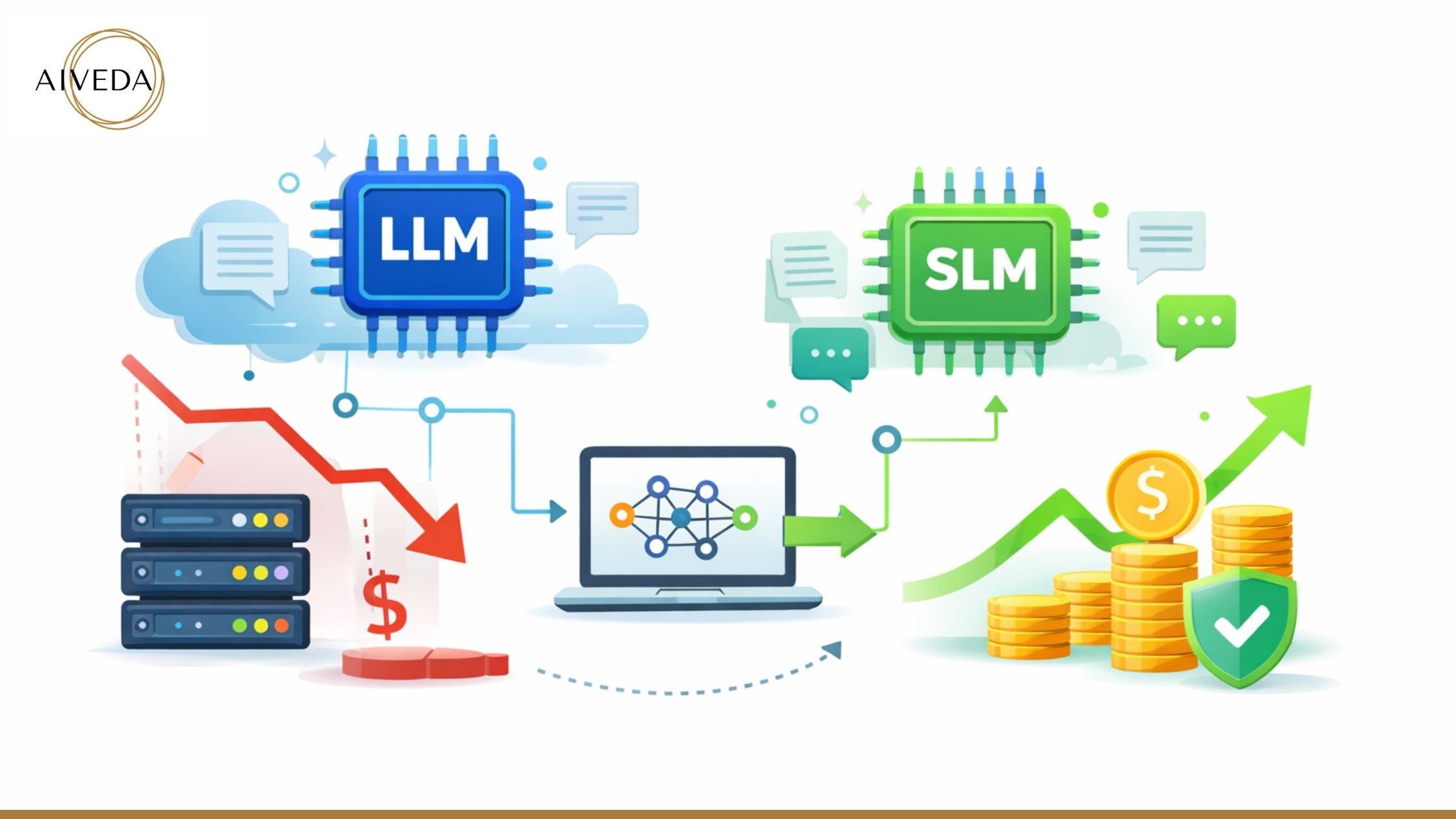
Over the past two years, enterprise AI usage has increased dramatically. However, many businesses are finding that implementing large language models in production presents a major operational challenge: cost. Large models have tremendous capabilities, but the main obstacle to long-term AI adoption is frequently the continuous costs of operating them at scale. LLM inference cost …
Across regulated and data-sensitive industries, enterprises are moving away from oversized, general-purpose AI models and toward compact, controllable alternatives. The shift isn’t just about performance. It’s about ownership, compliance, and cost. That’s why many teams now fine tune small language model architectures instead of deploying massive public LLMs. Small Language Models (SLMs) provide what enterprise …
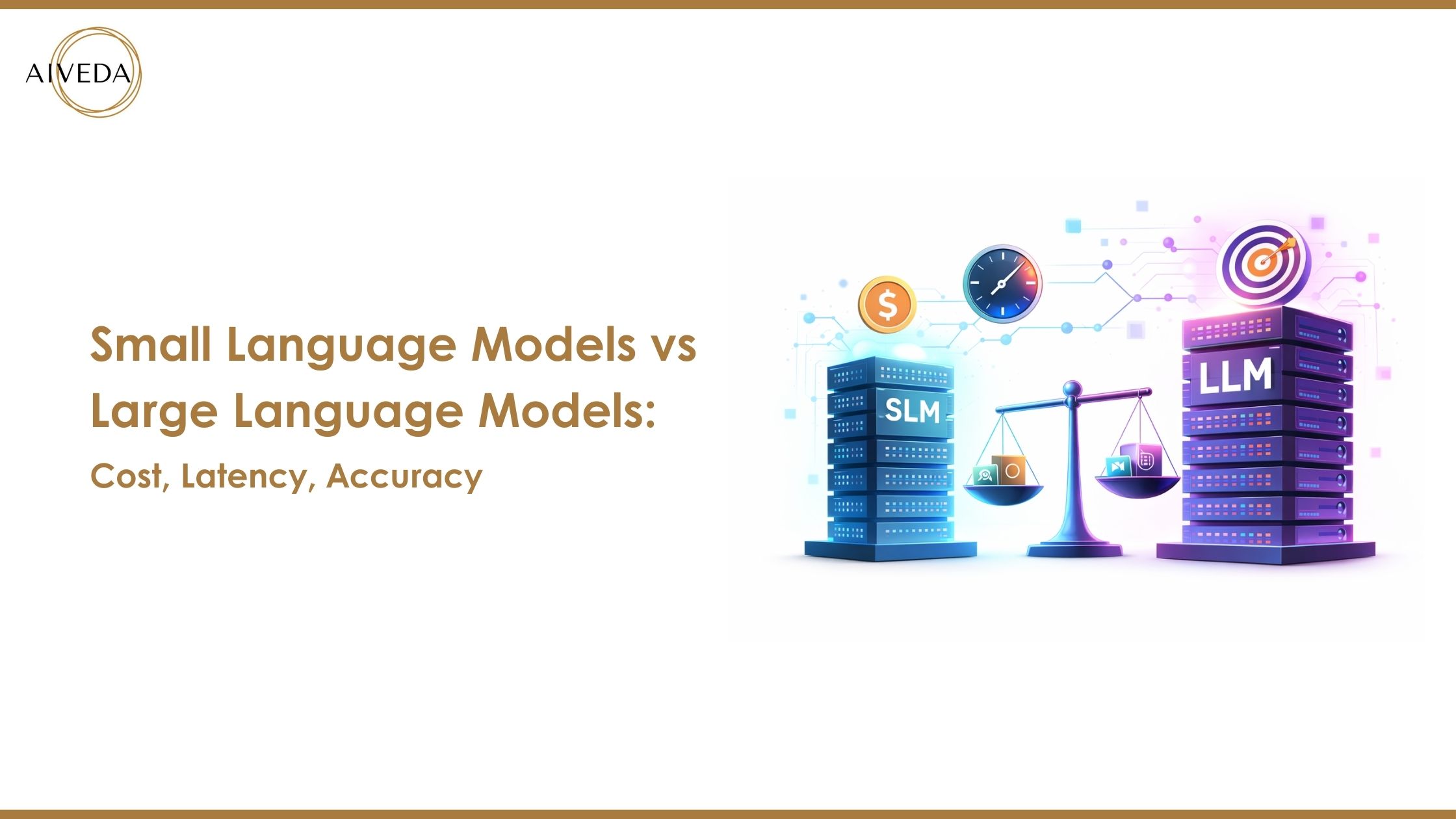
Artificial intelligence is no longer considered experimental in business. From customer service automation to internal knowledge assistants and predictive analytics, AI is becoming increasingly integrated into day-to-day operations. However, many business owners face a key decision that immediately affects budget, speed, and security: SLM vs LLM. While large language models make headlines for their remarkable …
Businesses are moving more and more away from open, shared AI technologies in this age of swift AI adoption. Also, toward private AI Roadmaps, which are organised plans that guarantee the safe, legal, and effective application of AI. Developing a careful AI roadmap is essential for striking a balance between innovation and governance, particularly for …
Enterprise use of private LLMs and domain-trained models is growing at an unprecedented rate. AI is already used in at least one business function by 78% of organisations, according to recent industry research. Large language models (LLMs) fuel many of these deployments, which drive workflows across security, analytics, automation, and customer engagement. However, enterprise LLM …
The private AI for enterprises has reached a tipping point where organisations must choose between developing unique solutions or adopting pre-built platforms. Companies across industries are under increasing pressure to incorporate AI assistants. This may alter how employees access information, automate procedures, and make choices, and yet the route forward remains unclear for many leadership …

Private LLM in VPC deployments is becoming a key component of secure, enterprise-grade AI infrastructure as businesses quicken their adoption of AI. Large language models (LLMs) are currently widely used; more than 67% of businesses aim to implement generative AI, indicating a quick transition from testing to production. But this expansion raises serious issues with …