
Call centers today are under more pressure than ever. People now expect immediate responses, personalized interactions, and 24/7 support regardless of the time or channel. Traditional call centers often struggle to meet these expectations due to increasing call volumes, staffing shortages, and rising operational costs. As a result, organizations are embracing voicebot customer service to […]
July 7, 2026
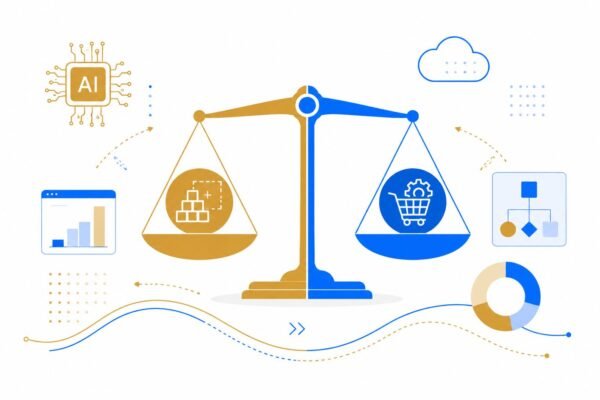
In 2026, the question is no longer whether your enterprise will integrate artificial intelligence, but how. This decision carries massive strategic and financial stakes. Misallocating engineering resources can tank an annual budget, while over-relying on restrictive, cookie-cutter vendor roadmaps can permanently destroy your competitive edge. The core dilemma centers on navigating the complex terrain of […]
June 29, 2026
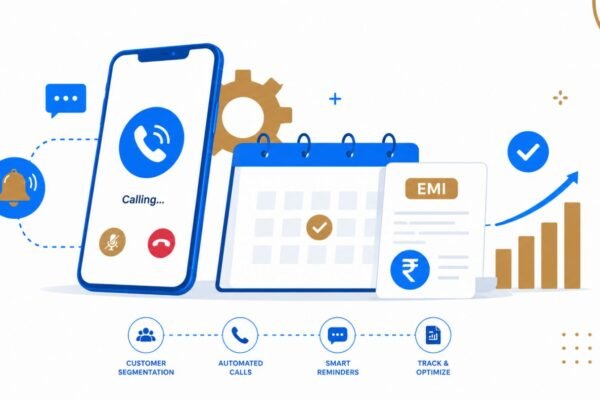
The NBFCs face an escalating challenge: balancing aggressive portfolio expansion with stable liquidity protection. As loan books grow, managing early-stage delinquency and maintaining low Days Past Due (DPD) metrics becomes an operationally intensive battle. Traditional debt recovery strategies heavily lean on legacy infrastructures, where rooms full of manual collection agents dialed through massive spreadsheets to […]
June 23, 2026

Navigating accounts receivable in the US market has never been more challenging. Organizations face a tightening web of regulatory frameworks like Regulation F, shifting consumer communication habits, and mounting overhead costs. Relying on outdated manual processes or spreadsheets to manage these challenges inevitably leads to missed promises-to-pay, human error, and stagnant recovery rates. To stay […]
June 23, 2026

Let’s be honest: digital lending has gotten incredibly fast. Today, a recipient can download an app, apply for a loan, pass an alternate credit check, and see funds hit their bank account in minutes. It is a massive win for financial inclusion and a masterclass in user experience. But there’s a flip side to this […]
June 13, 2026
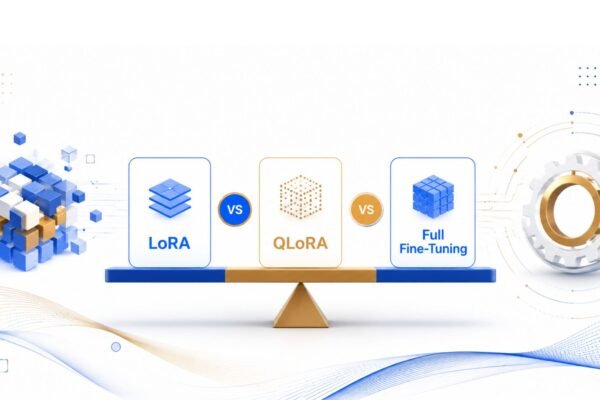
The enterprise AI landscape is undergoing a massive structural shift. While massive, trillion-parameter foundational models dominate headlines, machine learning engineers and AI researchers in production environments are leaning heavily into Small Language Models (SLMs). Models ranging from 3B to 14B parameters are proving that when properly adapted, they can match or exceed larger models on […]
June 12, 2026
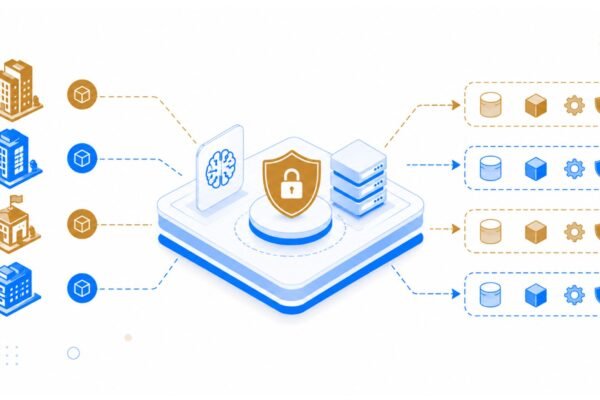
The enterprise rush to integrate generative artificial intelligence into core operations has collided head-on with the strict realities of data sovereignty, compliance frameworks like HIPAA and GDPR, and escalating compute expenditures. The core challenge has shifted from simply proving LLM capabilities to deploying them at scale across multiple corporate entities, departments, or external clients. Building […]
June 11, 2026
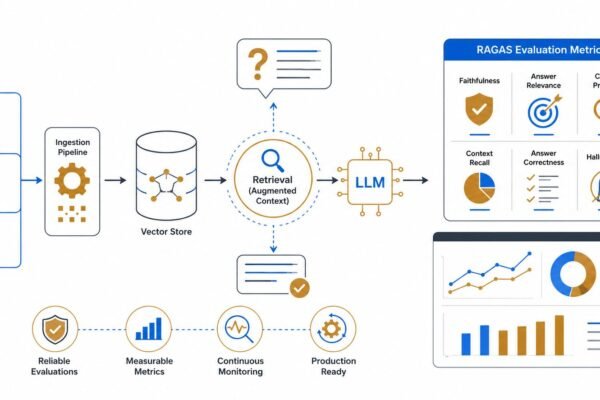
If you’ve deployed a retrieval-augmented generation (RAG) system, you know the pain: answers look great in a demo but hallucinate or drift once live. That’s why RAGAS evaluation production is no longer optional, it’s the backbone of trustworthy AI. This guide shows you how to design, test, and monitor production-grade RAG systems using a practical […]
June 10, 2026
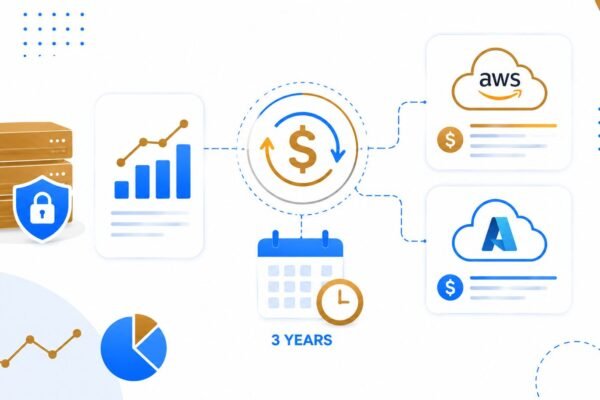
The initial phase of generative AI experimentation is officially over. The strategic mandate has shifted from building rapid proofs-of-concept to managing long-term production margins. When evaluating whether to build or buy enterprise AI infrastructure, relying purely on the advertised vendor pricing of cost per one thousand tokens is a common trap. Token costs are highly […]
June 5, 2026
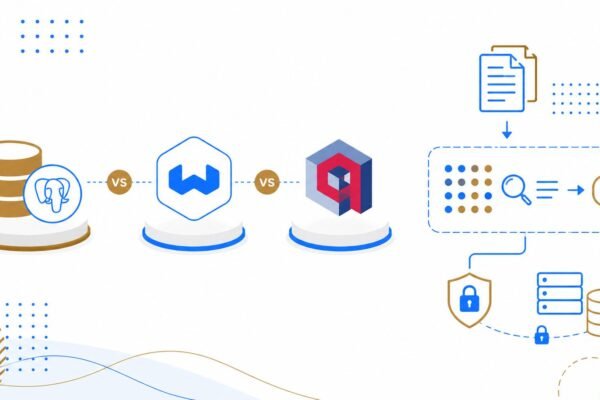
Enterprise AI teams are racing to deploy a secure Retrieval-Augmented Generation (RAG) systems that deliver accurate, context-aware responses while keeping sensitive data secure. But as organizations move from prototypes to production, a critical question emerges: what’s the right vector database for a private RAG architecture? The answer hinges on balancing performance, security, scalability, and operational […]
June 3, 2026